

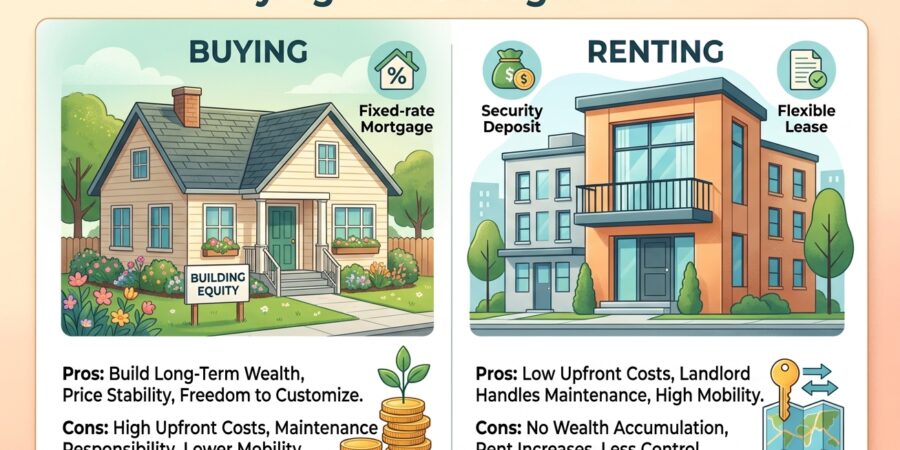
The classic debate of buying versus renting comes down to your personal financial situation, lifestyle goals, and how long you plan to stay in one place. Neither option is universally “better”—instead, each wins in different scenarios.
Here is a breakdown to help you weigh which path makes the most sense for you:
Buying: Best for Long-Term Wealth & Stability
Buying a home is often viewed as a forced savings plan and a long-term investment.
- Pros:
- Equity Building: Every mortgage payment chips away at the principal, building equity (net worth) over time. Rent payments, by contrast, leave you with nothing at the end of the month.
- Price Stability: If you have a fixed-rate mortgage, your principal and interest payments remain locked in for decades, protecting you from rising rental inflation.
- Freedom & Customization: You can paint, remodel, landscape, and modify the property however you like without needing a landlord’s permission.
- Appreciation: Historically, real estate tends to appreciate in value over the long haul.
- Cons:
- High Upfront Costs: You need cash for a down payment (typically 3% to 20%), closing costs, and moving expenses.
- Maintenance & Repair Costs: When the roof leaks or the AC breaks down, the bill falls entirely on you. Experts generally recommend setting aside 1% to 2% of the home’s value annually for maintenance.
- Lower Mobility: Selling a home is expensive and time-consuming. If you need to relocate suddenly for a job or personal reasons, selling can be a hassle.
Renting: Best for Flexibility & Financial Simplicity
Renting offers maximum freedom and separates your housing costs from property upkeep.
- Pros:
- Lower Upfront Expenses: Moving in typically requires just a security deposit and the first month’s rent, which is far less capital-intensive than a down payment.
- Predictable Budgeting: Property taxes, homeowners insurance, HOA fees, and maintenance costs are your landlord’s responsibility. Your monthly housing cost is generally fixed for the duration of your lease.
- High Mobility: At the end of a lease term, you can easily pack up and move to a new neighborhood, city, or state without worrying about selling an asset.
- Investment Opportunities: If you don’t tie up your cash in a down payment, you can invest that money in the stock market (e.g., index funds), which historically matches or exceeds real estate returns without the leverage and illiquidity risks.
- Cons:
- No Wealth Accumulation: Monthly rent payments cover your housing for that month, but they build zero equity or residual financial return.
- Rent Increases: Landlords can raise rent prices when your lease renews, exposing you to local market inflation.
- Lack of Control: You are subject to lease terms, pet restrictions, rules set by landlords or property managers, and the risk that the landlord might sell the property.
Quick Checklist: Which Should You Choose?
- Choose renting if: You plan to move within the next 3 to 5 years, prefer predictable monthly expenses without maintenance surprises, or want to keep your capital free for other investments.
- Choose buying if: You plan to stay put for at least 5 to 7 years (to offset hefty closing costs), have a stable income and emergency fund, and want the autonomy to build long-term home equity.




Leave a Reply