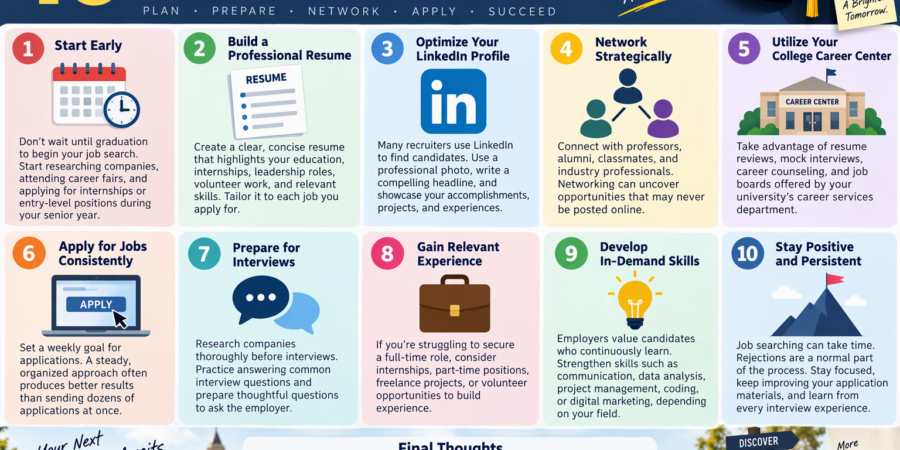
Here are 10 essential job search tips tailored specifically for college seniors to help you transition smoothly from campus to your career:
1. Start Early and Stay Consistent
Don’t wait until graduation week to begin looking. The best roles—especially structured graduate and entry-level corporate programs—often open applications 6 to 9 months in advance. Set aside a dedicated block of time each week to search and apply so it doesn’t become overwhelming.
2. Tailor Your Resume for Every Application
Generic resumes rarely pass Applicant Tracking Systems (ATS) or catch a recruiter’s eye. Customize your resume for each position by incorporating keywords from the job description and highlighting the projects, coursework, or leadership roles most relevant to that specific role.
3. Leverage Your University’s Career Center
Your tuition pays for a powerhouse of resources. Schedule a mock interview, have a career advisor review your resume and cover letter, and tap into your school’s exclusive job board (like Handshake).
4. Build and Utilize Your Alumni Network
Alumni are often eager to help fellow graduates from their alma mater. Use LinkedIn to search for alumni working at companies or in roles you admire. Reach out for short informational interviews to ask about their career path and advice—not necessarily to ask for a job outright, which often leads naturally to referrals.
5. Clean Up Your Digital Footprint
Recruiters routinely look up candidates online. Ensure your LinkedIn profile is polished, up-to-date, and professional. At the same time, privacy-lock or clean up any public social media profiles that don’t reflect the professional image you want employers to see.
6. Lean Into Internships, Projects, and Extracurriculars
If you don’t have years of traditional work experience, emphasize what you do have. Highlight capstone projects, student organization leadership, volunteer work, and previous internships. Focus on quantifiable achievements and skills gained in these settings.
7. Master the Art of the Informational Interview
Instead of blindly applying online, connect with professionals in your target field. Ask for a 15-minute virtual or coffee chat to learn about their industry. These conversations build your network, give you insider insights, and frequently unearth unadvertised job openings.
8. Prepare for Behavioral Interviews
Entry-level interviews rely heavily on behavioral questions like “Tell me about a time when…” Use the STAR method (Situation, Task, Action, Result) to structure your answers. Prepare 4 to 5 versatile stories from your coursework, group projects, or clubs that demonstrate teamwork, problem-solving, and leadership.
9. Don’t Ignore Small and Mid-Sized Companies
While everyone fights for spots at Fortune 500 companies, small and mid-sized businesses (SMBs) often offer faster hiring timelines, broader responsibilities, and quicker opportunities for professional growth.
10. Follow Up and Track Everything
Keep a spreadsheet of every job you apply to, including the company name, role, date applied, and status. After an interview, always send a personalized thank-you email within 24 hours to reiterate your interest and highlight a specific point from your conversation.